

報告題目:Optical Computing on Silicon-on-Insulator Based Photonic Integrated Circuits
時間: 2018年05月29日(周二) 14:00-17:00pm
地點: 電子與光學工程學院學科樓B-322
報告人:TheUniversity of Texas at Austin, David Z. Pan
主辦單位:電子與光學工程學院、微電子學院
報告人簡介:
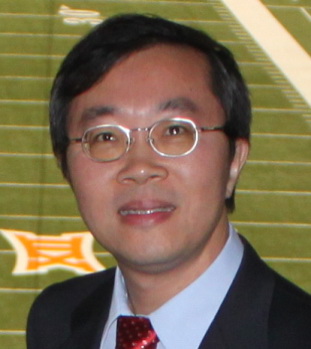
David Z. Pan (IEEE Fellow, SPIE Fellow) received his BS degree from Peking University and MS/PhD degrees from UCLA. He is currently Engineering Foundation Professor at the Department of Electrical and Computer Engineering, The University of Texas at Austin.His research interests include cross-layer IC design for manufacturing, reliability, security,machine learning in EDA, hardware acceleration, design/CAD for analog/mixed signal designs and emerging technologies such as nanophotonics. He has published over 300 refereed journal/conference papers and 8 US patents. He has served in many journal editorial boards and conference committees, including various leadership roles. He has received many prestigious awards, including SRC Technical Excellence Award, 15 Best Paper Awards at premier venues, DAC Top 10 Author Award in Fifth Decade, ASP-DAC Frequently Cited Author Award, Communications of ACM Research Highlights, ACM/SIGDA Outstanding New Faculty Award, NSF CAREER Award, SRC Inventor Recognition Award (3 times), IBM Faculty Award (4 times), UCLA Engineering Distinguished Young Alumnus Award, UT Austin RAISE Faculty Excellence Award, many international CAD contest awards, among others. He has graduated 23 PhD students who have won many awards, including First Place of ACM Student Research Competition Grand Finals, ACM/SIGDA Student Research Competition Gold Medal (twice), ACM Outstanding PhD Dissertation in EDA (twice).
報告摘要:
The advancement of photonic integrated circuits (PICs) brings new opportunities for on-chip optical computation and interconnection. Optical computing, as a promising alternative to traditional CMOS computing, has great potentials to offer ultra-high speed and low-power in information processing and communications. This presentation will discuss some recent research efforts and results on optical computing on silicon-on-insulator based PICs, including optical adder designs and a general logic synthesis framework for PICs. The advantages, limitations, and possible research directions will be discussed.